The AI coding tools space has a content problem. There is an enormous amount of writing about it and almost none of it is useful.
The pattern is predictable: a tool launches, the company publishes a press kit, a hundred articles appear within 48 hours summarising the press kit, and a reader who wants to know whether to spend $20/month on the thing is no better informed than before they started reading. The “review” is whatever the launch email said, dressed up as journalism.
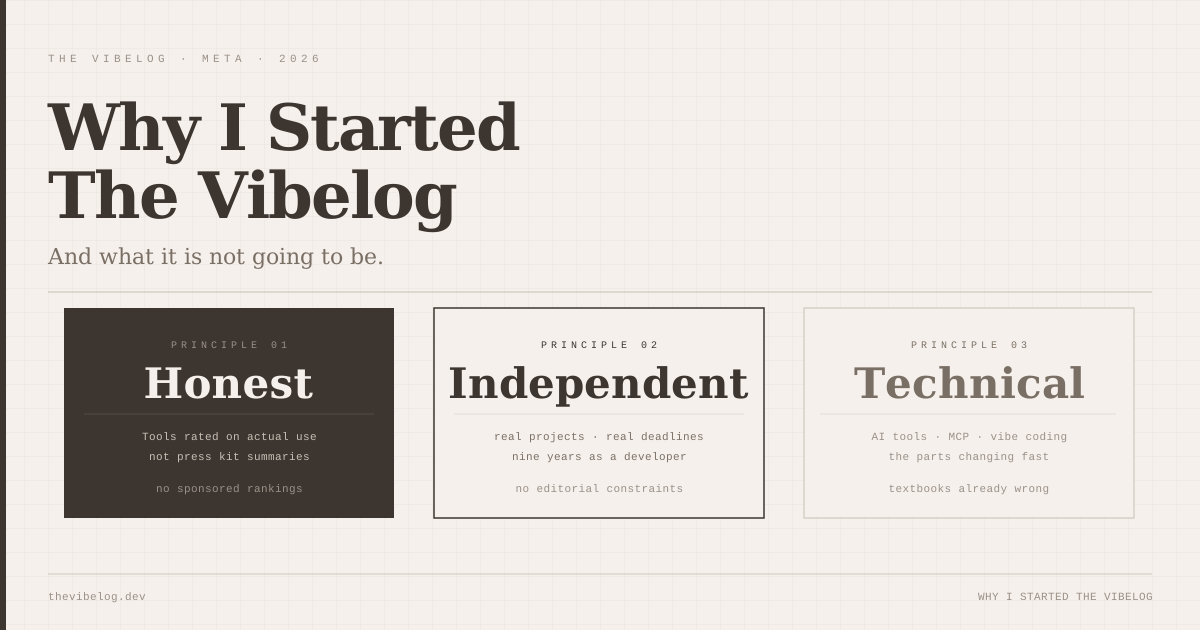
I have been a working developer for nine years. I use these tools daily. I have formed real opinions about which ones earn their price and which ones are impressive demos that fall apart in production. I started The Vibelog because I wanted a place to write those opinions without editorial constraints from companies that would prefer I not be honest about their products.
What this is
The Vibelog is a publication about AI coding tools, developer workflows, and the parts of software engineering that are changing fast enough that the textbooks are already wrong.
The focus is narrow on purpose. There are better places to read about cloud architecture, programming language debates, or engineering leadership. This is specifically about the tools that are changing how individual developers write code — and the honest question of whether they are actually worth using.
Every tool mentioned in a review has been used on a real project. Not a toy app. Not a “getting started” tutorial. Real code, real deadline, real teammates, real users.
What this is not
Not a sponsor vehicle. When you read that a tool is rated 9.1 here, that number is based on use. Companies cannot improve their rating with a check. They also cannot get their tool excluded — negative reviews are part of what makes the publication worth reading.
Not a summary service. If a company announces a new feature, there is no value in me paraphrasing their announcement. When a new feature is worth writing about, it is because I have used it and have something to say that the announcement does not.
Not an opinion-free zone. The voice here is a working developer’s voice. That means judgments, preferences, and the occasional strong disagreement with the conventional wisdom. The conventional wisdom about AI tools in 2025-2026 is frequently wrong in interesting ways, and saying so is the point.
The format
Two or three pieces a week. A weekly newsletter that surfaces the best of them plus things I am noticing that did not make it to a full piece.
New posts go out every morning. To follow along, use the RSS feed or the Feedly button at the bottom of every page.
The tools I cover most: Claude Code, Cursor, GitHub Copilot, Windsurf, and the Model Context Protocol ecosystem. If you have used these, you likely have opinions. If those opinions disagree with mine, I am interested — the contact details are on the about page.
One note about this blog itself: it is built with Astro, hosted on Cloudflare Pages, and costs a domain name per year. There are no ad networks, and we only use basic Google Analytics to see which articles developers find helpful. I mention this not to be self-congratulatory but because the stack is a good example of what is possible in 2026 with the right tools — including, yes, Claude Code to build it.