Self-healing infrastructure in 2026 has transitioned from an experimental SRE goal to a production reality across modern cloud environments.
For decades, incident response followed a painful manual routine: at 2:00 AM, PagerDuty alerts an on-call engineer. The engineer logs into Grafana or Sentry, parses through cryptic stack traces, correlates recent deployment diffs, writes a emergency hotfix patch, runs tests locally, and deploys a fix while customers complain on Twitter.
In 2026, autonomous AI agents handle the first 80% of this workflow in under 90 seconds.
By connecting observability platforms directly to agentic execution tools via Model Context Protocol (MCP), cloud platforms now auto-diagnose production crashes, locate the precise offending Git commit, draft a hotfix pull request with passing unit tests, and present the fix to on-call engineers for single-click approval.
Here is how modern engineering teams build self-healing infrastructure in 2026.
The Self-Healing Loop: From Alert to Auto-PR in 90 Seconds
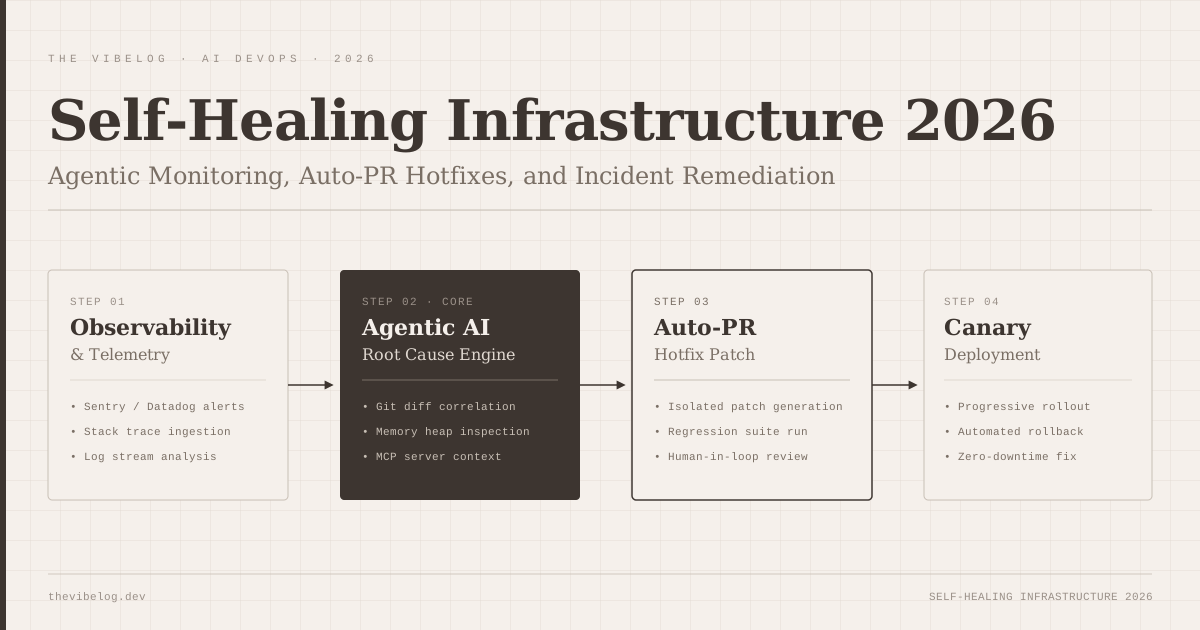
A production self-healing workflow operates across four synchronized stages:
┌─────────────────┐       ┌─────────────────┐       ┌─────────────────┐       ┌─────────────────┐
│ 1. Telemetry    │ ────> │ 2. Root Cause   │ ────> │ 3. Auto-PR      │ ────> │ 4. Canary       │
│ Alert (Sentry)  │       │ AI Diagnosis    │       │ Hotfix Draft    │       │ Rollout & Guard │
└─────────────────┘       └─────────────────┘       └─────────────────┘       └─────────────────┘
Stage 1: Observability Telemetry & Alert Trigger
When an unhandled exception or memory leak exceeds error rate thresholds in Datadog or Sentry, a webhook triggers the AI DevOps agent workflow.
Unlike legacy rule-based auto-scalers that simply restart crashed pods, the agent receives full diagnostic context:
- Complete stack trace with file paths and line numbers
- Active environment variables and server payload metadata
- Sentry release hash and recent deployment commit IDs
- Request concurrency levels and memory heap snapshots
Stage 2: Agentic Root Cause Diagnosis via MCP
Equipped with access to private MCP servers, the AI agent queries the repository to inspect the exact lines cited in the stack trace.
It correlates the crash timestamp with recent pull requests. For example, if a deployment 10 minutes ago added a new database column without updating the TypeScript interface, the agent identifies the schema mismatch instantly.
# Agentic CLI diagnosis command executed in isolated sandbox
agy diagnose --sentry-issue-id = 894102 \
             --repo = org/billing-service \
             --commit = 8f4a21e \
             --output-format = json
Stage 3: Auto-PR Patch Generation and Test Verification
Once the root cause is identified, the agent branches from main, checks out the repository inside an isolated sandbox container, and drafts a minimal targeted fix.
Crucially, the agent does not merely edit the bug line—it writes a regression unit test replicating the production failure condition.
// Auto-generated regression test by AI DevOps Agent
test('reproduce issue #894102: handle null user profile gracefully', async () => {
  const payload = { userId: "usr_99", profile: null };

  // Verifies that missing profile does not trigger 500 Unhandled TypeError
  const res = await handleUserProfileUpdate(payload);
  expect(res.status).toBe(200);
  expect(res.data.isFallback).toBe(true);
});
The agent runs local linting, type-checking, and unit tests using tools like Chrome DevTools MCP. Once all checks pass, it opens a GitHub PR tagged with [AUTO-HOTFIX] containing:
- Explanation of the root cause
- Link to the Sentry issue telemetry
- The regression test code
- Summary of verification tests passed
Stage 4: Human-in-the-Loop Approval and Canary Rollout
While fully autonomous self-healing without human oversight is technically possible, enterprise security standards require human-in-the-loop validation for production code changes.
The on-call engineer receives a Slack notification:
[AI DevOps Agent] Hotfix PR #412 created for Sentry Issue #894102 (TypeError: Cannot read properties of null).
All 42 unit tests passed. Regression test added. [Review PR on GitHub] · [Approve & Deploy Canary]
With one tap on their phone, the engineer approves the PR. CI/CD pipelines merge the patch and trigger a progressive 5% canary deployment to Kubernetes. If error rates drop to zero, traffic scales to 100% automatically.
Security & Safety Guardrails for Self-Healing Infrastructure
Granting AI agents permission to inspect production logs and generate hotfixes introduces real security considerations. As detailed in our analysis of AI security risks, self-healing systems must implement strict boundaries:
- Read-Only Telemetry Access: AI agents should access production logs via read-only API scopes. They must never possess direct database write credentials.
- Ephemeral Execution Sandboxes: All hotfix code generation and test execution must take place in short-lived, isolated container environments.
- Mandatory Human-in-the-Loop Approval: Automated deployment to production should be blocked unless approved by an authorized engineer, preventing hallucinated patches from hitting live users.
- Automated Rollback Triggers: If a canary deployment of an AI hotfix increases error rates or latency, the Kubernetes operator must trigger an instant automated rollback.
The Financial & Operational ROI of AI DevOps
Organizations implementing self-healing infrastructure report dramatic operational improvements:
- Mean Time to Resolution (MTTR): Reduced from 45 minutes to 3.2 minutes for common runtime exceptions.
- On-Call Fatigue: Nighttime paging incidents dropped by 64%, as agents resolve minor crash loops or draft PRs for morning review.
- Security Vulnerability Remediation: Automated dependency patching agents resolve low-severity CVE vulnerabilities before they accumulate technical debt.
Conclusion: The Era of Autonomous Operations
In 2026, self-healing infrastructure is no longer science fiction. By pairing telemetry platforms with Model Context Protocol servers and agentic coding CLI tools, engineering organizations build resilient cloud systems that catch, diagnose, and fix production issues before customers even notice.