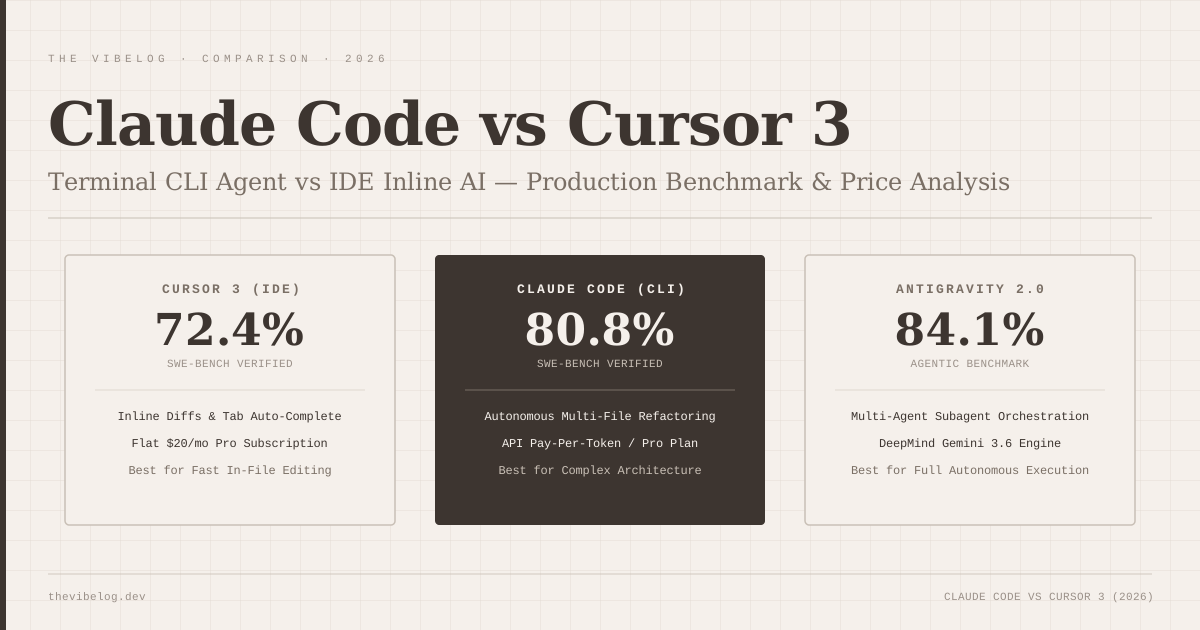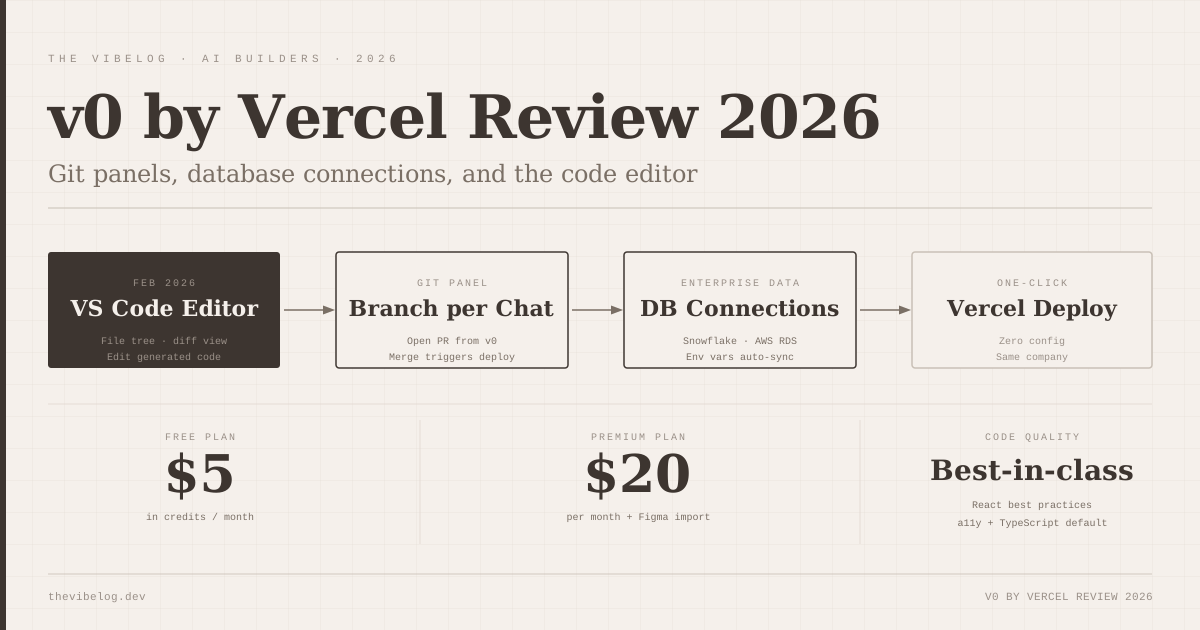
v0’s code quality has been the strongest of the major AI builders since it launched. The February 2026 update answered the question of why that quality was historically hard to get into production: it added the delivery pipeline. A VS Code-style editor, a git panel that creates branches and opens PRs, and database connectivity to Snowflake and AWS — all inside v0.
The additions do not change what v0 does well. They change how far you can take it without leaving the platform.
The February 2026 Update: What Actually Shipped
The code editor is the most visible addition. It is a VS Code-style interface inside v0 — file tree, file-by-file editing, diff view of AI-generated changes versus your edits. You can open any generated file, read the implementation, and modify it directly. This closes the gap between “see the generated code” (which v0 already had) and “edit the generated code” (which required leaving the platform and opening a local editor).
The diff view is particularly useful. When you prompt v0 for a change, the editor shows you exactly what the AI modified versus what was already there. Code review inside the generation tool — it is a different way of thinking about the workflow.
The Git panel is the other major change. Each chat creates a new branch. When you are satisfied with what the chat produced, you can open a PR against main directly from v0. When the PR is approved and merged, the deployment on Vercel triggers automatically. The full path from “start a new feature” to “merged and deployed” happens without leaving v0 or opening a terminal.
The specific design decision I find interesting is “branch per chat.” It maps the AI conversation to a git concept naturally — one conversation is one feature is one branch is one PR. Teams where not every person can open a terminal can now contribute to a git-native workflow through conversation.
Database Connectivity: Snowflake and AWS
The database connections are aimed at a different use case than most v0 coverage addresses.
Snowflake and AWS database connectivity let v0 generate apps that connect directly to enterprise data sources. Custom reporting dashboards, internal analytics tools, data-driven process automation — the apps that have always been possible to generate with v0 but previously had no way to talk to the data they needed.
The connections are secure. Credentials are managed through environment variables that sync via the Vercel marketplace, not hardcoded into generated code. The generation model understands how to write queries against connected schemas.
This is not a feature for the Lovable/Bolt audience building greenfield consumer apps. It is a feature for the developer at a company with an existing Snowflake warehouse who needs to build a custom reporting layer on top of it, or the team with production data in RDS that wants to wrap it in an internal tool. v0 now has a story for that use case.
Full-Stack Next.js: API Routes and Server Actions
v0’s full-stack capabilities expanded in 2026 beyond what was available in the original UI-generation release. API Routes and Server Actions are now first-class targets for v0 generation — you can describe backend logic and v0 will generate the Next.js server-side implementation, not just the UI.
Multi-page routing is included. v0 can generate a multi-page Next.js application with consistent navigation, shared layouts, and page-level data fetching — not just a single component or a single route.
This makes v0 viable for projects that need both a polished UI and real backend logic. The limitation is that “real backend logic” in v0’s model means Next.js server-side patterns — API routes, server actions, middleware. If your backend requirements go beyond what Next.js handles natively, you are writing that code yourself.
What v0 Still Does Not Do Natively
This is the section most v0 reviews skip, and it is the section that matters most if you are deciding whether v0 is the right tool for a specific project.
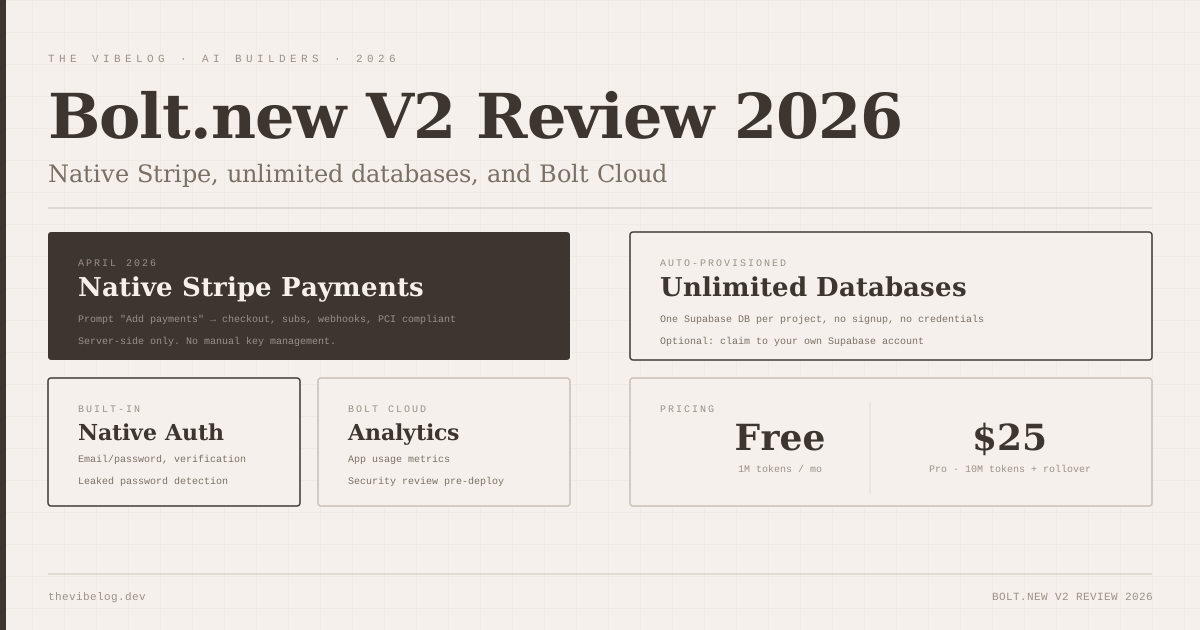
Auth: v0 has no native authentication. It can generate auth code — form components, API routes for login/signup, session handling — but you configure the auth provider and set up the account. There is no “add auth” prompt that just works the way Lovable’s Supabase auth does.
Stripe: No native Stripe integration. v0 can generate a Stripe implementation — checkout sessions, webhook handlers — but you set up the Stripe account, manage the keys, and test the webhook events yourself. Bolt.new and Lovable both have native Stripe that requires no manual configuration.
Supabase: Available through the Vercel marketplace, which is the right architectural choice given Vercel and Supabase’s close relationship. But “Vercel marketplace” means: you already have a Supabase account, you click Connect in the marketplace, environment variables sync. Zero-config it is not. If you are building your first full-stack project and do not want to manage a Supabase account, v0 is not the right starting point.
Being direct about these gaps matters because the people most likely to be disappointed by v0 are those who chose it expecting a Lovable-like experience where auth and payments just work. v0’s model is different: it generates excellent code, you supply the configuration. The full comparison of how all three major builders handle auth and payments is in the Lovable vs Bolt vs v0 comparison.
Code Quality: The Reason People Choose v0
The code quality argument for v0 is real and worth making explicitly.
v0-generated React components follow React best practices: hooks are used correctly, side effects are isolated, state is co-located with the components that need it. Accessibility attributes are included by default — aria-label, role, tabIndex — not added as an afterthought. Components are responsive by default. TypeScript typing is idiomatic, not defensive.
The output looks like something a senior frontend developer wrote. Not generated, not patched, not “works but nobody would write it this way.” If you open v0-generated code in code review, it passes the same standards you would apply to human-written code.
This is the primary reason to choose v0 over alternatives. If you are building UI that will be read, modified, and extended by a development team — if code quality is a first-class requirement — v0 produces output that holds up to that standard more consistently than any other AI builder.
One-Click Vercel Deployment
v0 and Vercel are the same company, and the deployment integration reflects that. You click Deploy, and the project goes to Vercel. Environment variables set in v0 are available in the deployment automatically. You do not configure a deployment pipeline, you do not manage build settings, you do not set up a hosting provider.
For anyone already on Vercel — which is a large fraction of Next.js developers — this is the zero-friction deployment path. The combination of v0-generated code and Vercel hosting is the most cohesive delivery story in the AI builder space.
Pricing
Free: $5 per month in generation credits. Premium: $20 per month with $20 in credits plus Figma import and API access for custom workflows.
The credit system is different from Bolt.new’s token model and Lovable’s credit model — it is dollar-denominated, which makes the limit intuitive but also makes it easy to burn through if you are doing heavy generation work. A complex multi-page app with significant iteration can consume the monthly free credit in a single afternoon.
The Figma import on Premium is worth noting for teams that work from a design handoff — you can import a Figma design and have v0 generate the corresponding Next.js implementation.
Who v0 Is For in 2026
v0 is the right tool for three specific profiles:
Developers and teams already on Vercel who want AI-assisted development without changing their infrastructure. The git workflow, the deployment integration, and the Next.js native approach are all designed for this audience.
Frontend developers who care about code quality and will be handing generated code to a team for review and ongoing development. v0’s output meets a professional code review standard. Bolt.new and Lovable produce working code; v0 produces working code that developers will not need to immediately refactor.
Teams where non-engineers need to contribute to git workflows. The branch-per-chat, PR-from-v0 model means a designer or product manager who has never opened a terminal can create a feature branch, propose changes via PR, and have an engineer review and merge — all through conversation with v0.
It is the wrong choice if you need zero-config auth and payments, if you are a non-developer who finds the code editor disorienting, or if your preferred stack is not Next.js on Vercel.
The agentic coding patterns guide covers how the major AI builders fit into different development workflows. v0’s 2026 position is: the highest code quality output in the AI builder category, now with a complete delivery pipeline. The tradeoff is that you bring the infrastructure knowledge.